Every homeowner knows the drill: you restock on trash bags, get home, and the liner either swallows the can the moment something heavy drops in or sits slouched below the rim like it gave up. A trash bag only works when it actually fits the can it is lining and the job it is holding. This trash bag size guide breaks down the five sizes that cover nearly every household need, shows you how to measure your can in two minutes, and explains mil thickness in plain English.
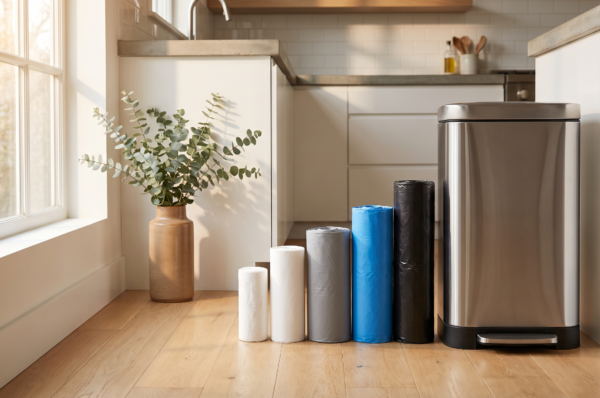
The Five Sizes That Cover Almost Every Home
4 Gallon: Small Cans, Daily Emptying
Four-gallon bags line bathroom cans, bedroom wastebaskets, desk bins, and nursery pails. Because they are small, they are cheap to run through and easy to empty daily, which is exactly what you want in a bathroom, where lingering trash is how odors get started. Most round bathroom cans between 10 and 12 inches tall take this size. If you are lining several little bins around the house, our 4-gallon bags come in compact rolls that store under the sink.
8 Gallon: The In-Between Size
Eight-gallon bags fit slim cans in offices, laundry rooms, dorms, and small apartments where a full-size kitchen can will not fit. They are also handy as car and camper liners. If your current bag puddles at the bottom of a mid-size can, this size is usually the fix. Our 8-gallon bags fit most slim bins up to about 18 inches tall.
13 Gallon: The Kitchen Workhorse
When a box says tall kitchen, it means roughly 13 gallons. This is the standard for the typical 23-to-25-inch kitchen can, and it handles dinner scraps, delivery packaging, and the occasional science experiment from the back of the fridge. Heads-up: tall kitchen cans vary by an inch or two between brands, so measure the height before buying in bulk. Our 13-gallon drawstring bags are cut for standard tall cans, and the drawstring cinches tight so the liner never slips down midweek.
30 Gallon: Garage and Backyard Duty
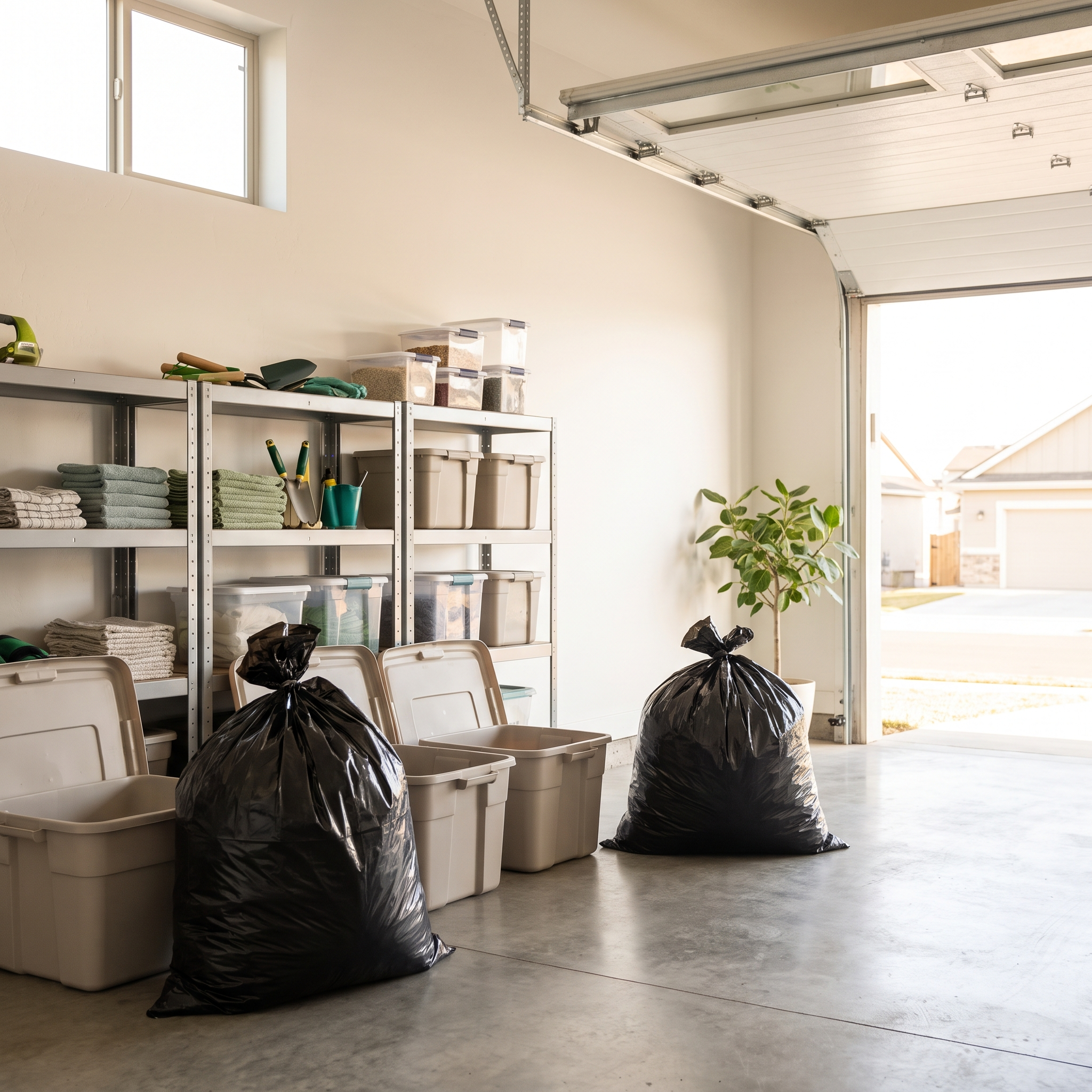
Thirty-gallon bags fit most large trash cans and rolling bins, and they are the right call for garage cleanouts, basement purges, party aftermath, and barbecue mess. Anything bigger than a kitchen load but smaller than a construction site usually lands here. Our 30-gallon bags are sized to standard large cans with room left to tie off.
45 Gallon: Yard Season and Heavy Jobs
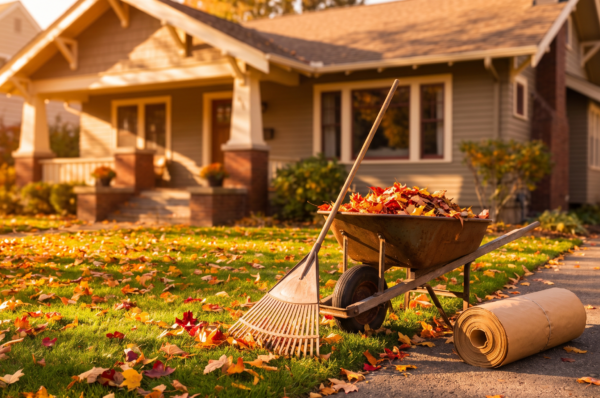
Forty-five gallons and up is contractor territory, the thick, brute-force bags for fall leaves, storm debris, hedge trimmings, moving purges, and renovation demo. At this size, thickness matters more than anything, because a flimsy bag full of branches fails at the worst possible moment. Our 45-gallon contractor bags are the ones we reach for at home when the weekend project turns big.
How to Measure Your Trash Can in Two Minutes
If your liners slip or sag, measure before you reorder. You need a tape measure and two numbers:
- Can height, from the floor to the rim.
- Width across the top, diameter for round cans, or width plus depth for rectangular ones.
Then run the math:
- Bag height = can height + half the diameter + 3 to 4 inches of overhang so you can tie the bag off.
- Bag width = circumference divided by 2. For round cans, circumference is diameter times 3.14. For rectangular cans, add width and depth, then double it.
One more rule of thumb: match the bag’s gallon rating to your can’s, or go one size up. A slightly oversized bag stays anchored; an undersized one is living inside the can by Tuesday.
Trash Bag Thickness: What Mils Actually Mean
A mil is one-thousandth of an inch, roughly the thickness of a human hair, and it is how liner strength is rated. Higher mils mean tougher bags:
- 0.7 to 0.9 mil: light duty, for paper, tissues, and dry bathroom waste.
- 1.1 to 1.3 mil: the everyday kitchen range, for mixed food scraps and packaging.
- 1.5 to 2 mil: wet and heavy loads, like yard clippings, party messes, and garage cleanouts.
- 2 mil and up: contractor grade, for wood scraps, drywall, glass, and anything with points and edges.
Quick material note: low-density polyethylene stretches, while high-density resists puncture. For a kitchen can with chicken bones and fork tips in it, puncture resistance wins every time.
Room-by-Room Cheat Sheet
If you want the short version of this whole trash bag size guide, save this table:
| Where | Typical Can | Bag to Buy |
|---|---|---|
| Bathrooms | 10 to 12 in. tall | 4 gallon |
| Bedroom, office, laundry | 15 to 18 in. tall | 8 gallon |
| Kitchen | 23 to 25 in. tall kitchen | 13 gallon |
| Garage, outdoor bin | 30 to 33 gallon can | 30 gallon |
| Yard, renovations | Brute or wheeled can | 45 gallon |
Three Habits That Waste Perfectly Good Bags
- Guessing instead of measuring. Cans with the same gallon rating are often different heights, and height is what makes a liner fit. Measure once and you are done for years.
- Double-bagging to compensate. If you are nesting two bags, you bought the wrong mil. One 2-mil bag outlasts two thin ones and costs less per use.
- Overfilling past the rim. The overhang you left for tying is not spare capacity. Once trash sits above the can’s edge, you are lifting weight the bag was never rated for.
The Bottom Line
Match the gallon size to the can, leave a few inches of height for overhang, and scale the mil to the mess. Once you measure, keep the numbers in your phone’s notes so you never guess in the store aisle again. And when heavy seasons roll around, our 45-gallon heavy-duty bags are built to haul leaves, branches, and garage purges without splitting, the quiet fix for the jobs that eat ordinary bags alive.