13-Gallon Drawstring Trash Bags: What Actually Matters
A 13-gallon kitchen can is the workhorse of most American homes. Coffee grounds, wet food scraps, packaging, and the occasional leaky container all go in the same liner, several times a day. When the bag fits poorly, the drawstring slips, or the bottom fails on the walk to the curb, you are not buying a cheaper bag — you are buying a second cleanup. If you are shopping for 13 gallon drawstring trash bags, skip the packaging slogans and look at a short list of things that actually show up in a kitchen: fit, seal, drawstring reliability, leaks, and how the liner clings to the can.
Fit Comes First: The Can, Not the Marketing
Thirteen gallons is a can size, not a guarantee that every bag labeled for the kitchen will sit the same way. A liner that is too short will not cuff over the rim, so the first handful of scraps can slip between bag and can. A liner that is much taller will give you extra overhang to fold over the rim, which is useful, as long as you actually cuff it instead of letting a long skirt bunch at the bottom.
Before you open a new box, measure the can you already own: height to the rim, and the opening (round diameter or the long side of a rectangle). Then look at bag dimensions, not just the gallon number. A bag should reach the rim with enough extra film to fold over and stay put. If it will not stay cuffed, nothing else about the closure will save you from drips down the outside of the can.
Liner Cling Without the Fight
Kitchen liners fail in two opposite ways: they slump into the can as soon as something heavy hits the bottom, or they stick so tightly you tear the film trying to pull the bag out. A practical middle ground is a bag that cuffs cleanly, sits against the walls without huge air pockets, and still slides out when you lift from the drawstring. If a liner constantly collapses, the cuff is too shallow or the bag is too small for that particular can — not a problem you solve by stuffing more trash in.
The Bottom Seal Is Where Kitchen Leaks Start
Most kitchen trash is not dry. Coffee, fruit, leftovers, and soaked paper towels collect in the bottom of the bag. Side-sealed bags can leave a channel where liquid sits. A star-sealed (or similar multi-fold) bottom spreads weight and gives liquid fewer obvious seams to exploit. That does not make any bag magic: a puncture from a bone, a fork, or a split container will still leak. It does mean the everyday wet load is less likely to weep through the base on a normal trip to the bin.
If a can already smells like last week’s soup, wipe it out before you put in a fresh liner. A new bag cannot hide residue on the plastic, and a film of old liquid is exactly what makes the next bag slide down.
Easy-Tie Only Matters If the Drawstring Holds
The point of a drawstring is not a prettier knot. It is a closure you can cinch with one motion, then use as a handle so you are not pinching a slippery film shut with both hands. What actually matters:
- The string pulls evenly. If one side gathers and the other stays open, liquid and small scraps escape at the gap.
- The closure stays closed while you lift. A bag that pops back open at the rim is not sealed, no matter how fast you tied it.
- The handles can take the load. Kitchen bags fail at the top as often as the bottom when the film stretches and the string cuts through.
Fill bags to a level you can still cinch. An overstuffed liner is the usual reason a drawstring rips or a “tied” bag dumps on the floor. Leave a few inches of headroom, pull the string fully, and lift from the handles — do not bear-hug the middle.
What Actually Matters in 13 Gallon Drawstring Trash Bags
Use this as a kitchen checklist, not a spec-sheet contest:
- Dimensions you can cuff. The bag has to reach the rim of your 13-gallon can with enough extra to fold over. Gallon labels vary by brand; inches do not.
- A bottom built for wet waste. Look for a reinforced or star-sealed base if coffee, produce, and leftovers are a daily load.
- Drawstrings that cinch and carry. Easy-tie is only useful if the closure holds while you walk.
- Film thick enough for kitchen debris. Thicker is not automatically better for every job, but a thin liner that stretches shiny and then splits is a false economy.
- A pull-out you can finish in one motion. If you have to shake, twist, and wrestle the bag off the can, the fit is wrong or the bag is overfilled.
You do not need to name-drop other brands to apply this. If a liner slides, leaks at the base, or will not stay tied, it failed the job — regardless of what the box promised.
A Kitchen Routine That Stops Most Messes
Good bags still need a little habit behind them.
Double-line only when the load is nasty
Two liners can be a backup for a very wet day (soup bones, a broken jar, a lot of dripping packaging). For ordinary kitchen trash, one well-fitted bag that you do not overfill is cleaner than two bags you cannot cinch. If you double-line, cuff both so you can pull the inner bag and still have a liner in place.
Keep liquids from pooling
Dump coffee grounds after they drain, wrap dripping food in a scrap of paper or a used bag from produce, and do not pour grease down into the can. Cooled grease in a sealed container belongs in the trash; liquid grease belongs nowhere near an open liner.
Change the bag before it is heroic
A 13-gallon can that is packed to the rim is harder to tie, heavier to lift, and more likely to smear the rim. Take it out when it is full enough to be worth the trip, not when it is a sculpture. Wipe the rim when you reline. That is what keeps the next bag from clinging to yesterday’s residue.
A Durable Drawstring Option If You Want a Known Spec
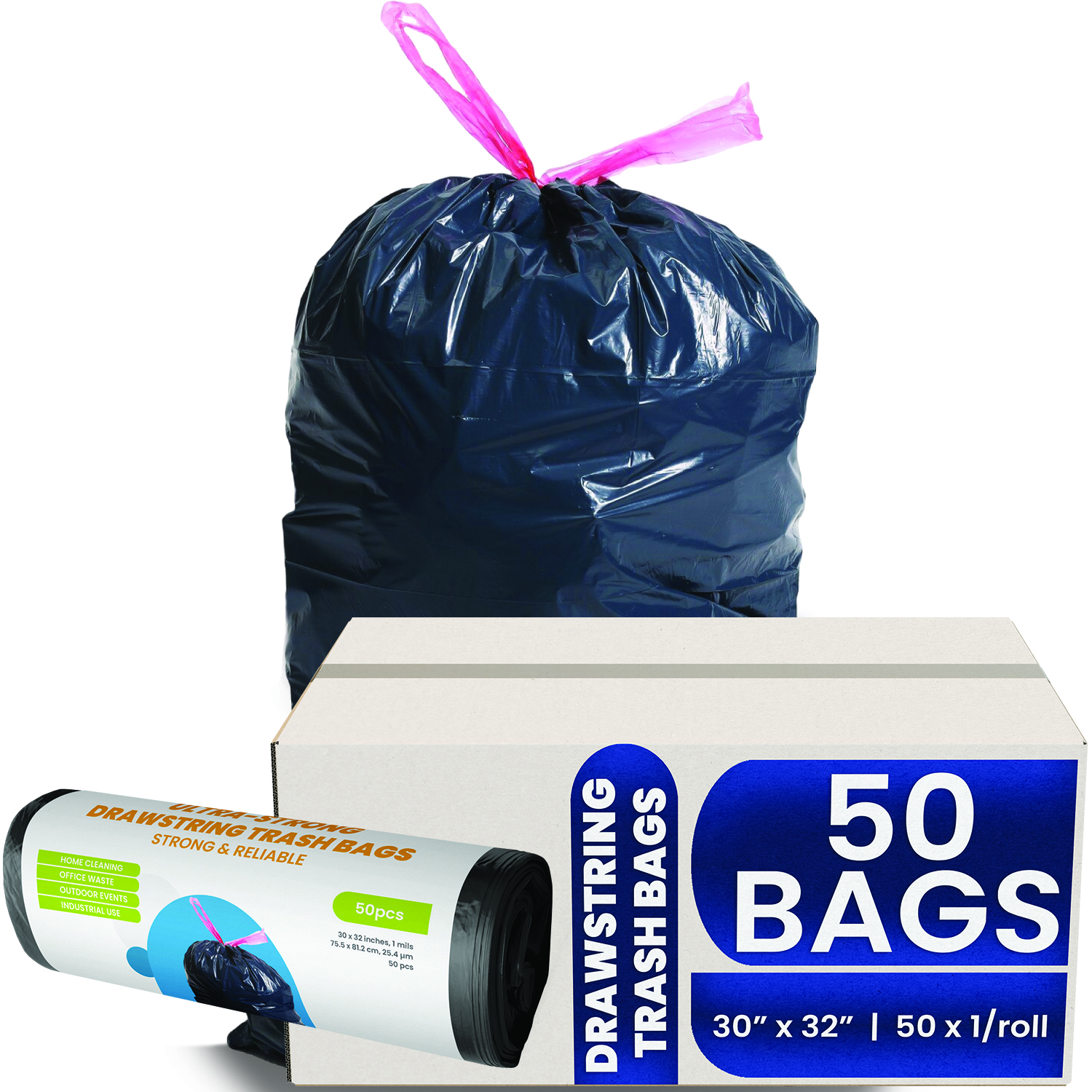
If you want a drawstring liner with published dimensions and a closure designed to tie, lift, and carry, Melplas makes Drawstring Trash Bags, 30 x 32 inches, 1 mil, 50 count. The product page lists a 1 mil polyethylene film, a star-sealed bottom for leak resistance and even weight distribution, and easy-pull drawstring handles. Capacity on that listing is 31 gallons, and Melplas describes the size as fitting most medium-to-large kitchen and office cans — useful context if your 13-gallon kitchen can needs extra cuff height rather than a bag that barely reaches the rim.
Those are the facts on the Melplas listing. Use them the same way you would any spec: compare inches and closure to the can in your kitchen, then judge the bag by whether it stays cuffed, stays tied, and makes it to the bin without a trail.
The Takeaway
Kitchen trash is wet, frequent, and unforgiving of a bag that almost fits. For 13 gallon drawstring trash bags, what actually matters is a liner that cuffs on your can, a base that can handle everyday liquid, and a drawstring you can cinch and carry without the bag opening on the way out. Buy for those jobs. Everything else is decoration on the box.