Buy the wrong size trash bag once and you will not forget it. The bag slides down inside the can on day one, tears at the rim when you lift it, or fits so loose it swallows the bin whole. The fix is easier than the aisle-staring suggests: match the bag to the room. This trash bag sizes guide covers the three capacities that handle almost every can in an American home — 4, 13, and 30 gallons — with a room-by-room chart and a two-minute method for measuring any odd bin you own.
The Short Answer: Most Homes Need Only Three Sizes
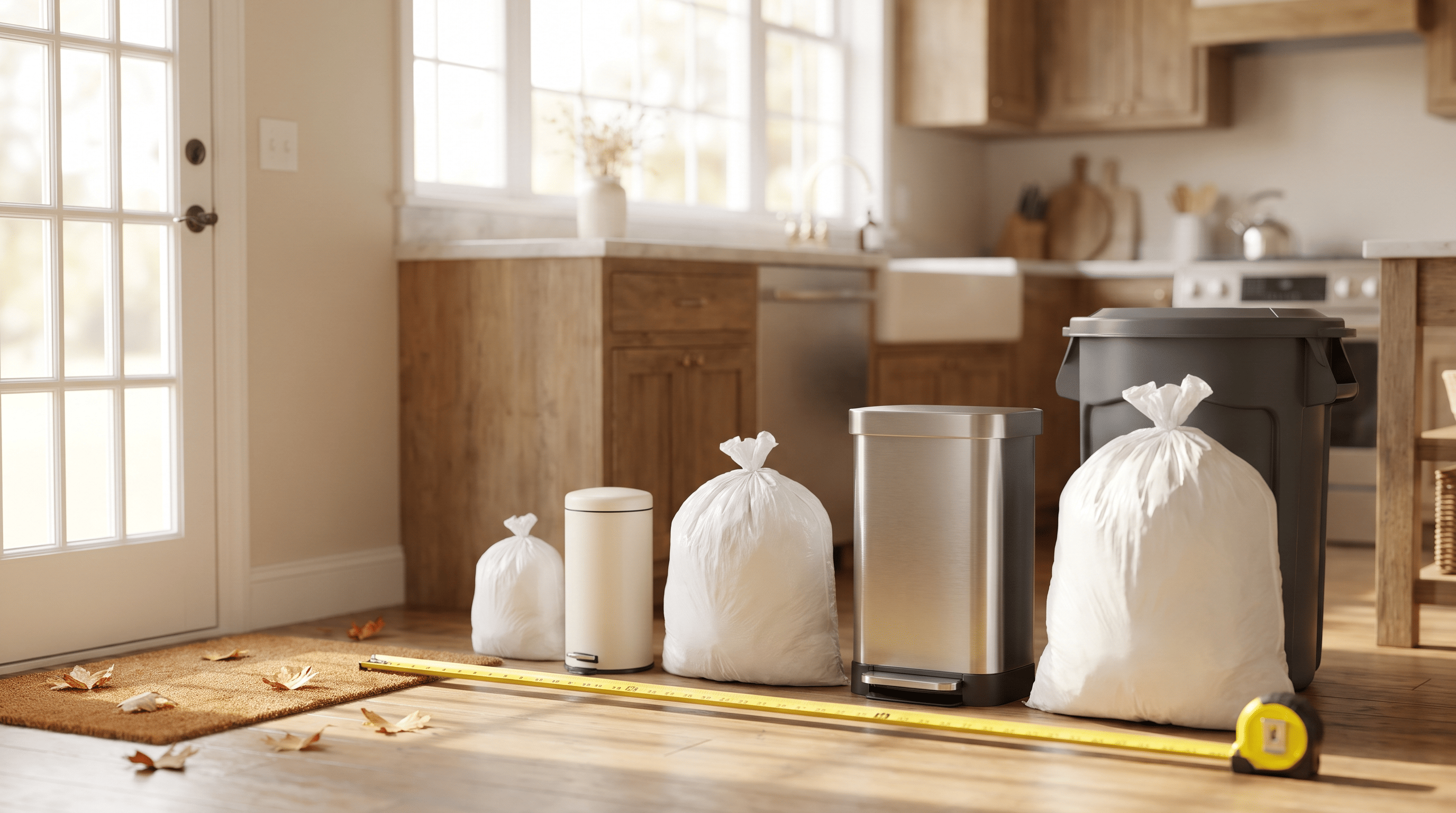
Walk through a typical house and you will pass a dozen trash cans but only a few sizes of cans. That is why a single restock order can cover the whole place:
- 4-gallon bags — bathrooms, bedrooms, offices, laundry rooms, and any can up to about 7 gallons.
- 13-gallon bags — the kitchen and dining room workhorse; the classic tall-kitchen shape.
- 30-gallon bags — garage cans, yard waste, moving day, and seasonal cleanouts.
One caveat before the chart: gallon ratings are nominal, meaning a “13-gallon” bag from two different brands can vary by an inch or two. True fit comes from dimensions, and we will get to exactly how to check those below.
Room-by-Room Trash Bag Size Chart
| Room | Typical Can Size | Bag That Fits | Why It Works |
|---|---|---|---|
| Bathroom, powder room | 1.5–2 gal | 4 gallon | Light trash; a few inches of overhang ties off clean |
| Bedroom, nursery, office | 2–4 gal | 4 gallon | One size covers every small can in the house |
| Laundry room, mudroom | 4–7 gal | 4 gallon | Lint and packaging are light; swap weekly |
| Kitchen, dining, pantry | 12–13 gal | 13 gallon tall kitchen | Drawstring cinches at the rim and carries daily volume |
| Garage, basement, workshop | 20–32 gal | 30 gallon | Wide, tall body swallows bulky debris |
| Yard, patio, leaf piles | 30+ gal | 30 gallon | Built for bulky-but-light loads like leaves |
Got a can that does not match anything above? Skip to the measuring section — you can nail the right bag in about two minutes.
4-Gallon Bags: Small Cans, Constant Turnover
Bathroom trash is light and never-ending: tissues, cotton swabs, wipes, the occasional empty bottle. Because the loads are so light, the case for small bags is not capacity — it is hygiene. A 4-gallon bag on a 2-gallon can leaves plenty of overhang to tie, and swapping it every few days keeps musty smells from ever settling in.
A typical 4-gallon bag runs about 16 by 20 inches flat, which fits small cans with room to spare. The same box handles desk-side paper, dryer lint in the laundry room, and car trash. One caution: if you scoop cat litter, fill these bags only halfway — clumping litter gets heavy fast, and small bags are not rated for a full load of it.
13-Gallon Bags: The Kitchen Workhorse
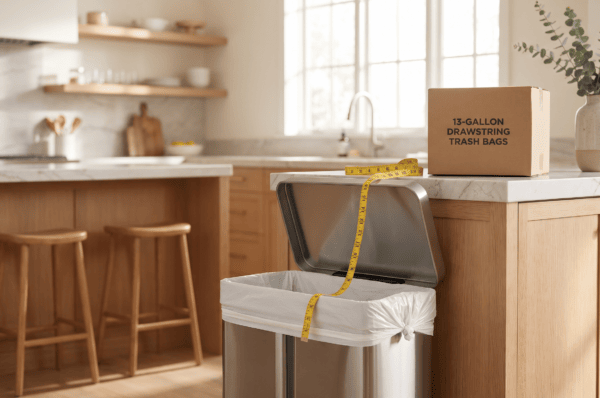
Nearly every American kitchen runs a 12- to 13-gallon step can or freestanding bin, and the tall-kitchen bag was built for it — usually around 24 inches wide flat and 27 to 28 inches tall. What you want at the rim is 3 to 4 inches of overhang so the drawstring can cinch and carry without slipping.
Kitchen loads are also the wettest in the house, which is where fit meets function. Fill to about three-quarters, especially after a heavy cooking day, then cinch and lift straight up — never sideways — to avoid snagging on the rim. If you are restocking before the holidays, Melplas 13-gallon drawstring bags use a reinforced bottom seam that holds up under wet food scraps, which is exactly where cheap bags fail.
30-Gallon Bags: Bulky Is Not the Same as Heavy
The 30-gallon class — typically about 30 by 33 inches — covers garage cans, leaf collection, moving, and the twice-a-year deep cleanout. The trick is matching the load to the bag. Leaves, packing paper, and bubble wrap are bulky but feather-light: fill those bags to the top. Broken-down cardboard? Fine. Broken glass, drywall chunks, and tile scraps are dense — fill those bags only halfway and lift-test before you commit to the walk to the curb.
A quick rule for the classic 13 gallon vs 30 gallon debate: if the can stands taller than your knee or wider than a car tire, it wants a 30. And keep a roll in the trunk — a 30-gallon bag is the handiest thing in the car for muddy cleats, thrift-store runs, and surprise yard-sale hauls.
How to Measure Your Trash Can in Two Minutes
Step 1: Measure the Opening and the Height
Grab a tape measure. For a rectangular can, measure the length and width of the opening at its widest point, then the height from the floor to the rim — outside, not inside. For a round can, measure straight across the top for the diameter.
Step 2: Do the Bag Math
- Flat width: at least half the opening’s perimeter. For rectangular cans that is simply length + width, so a 14-by-10-inch top needs a bag at least 24 inches wide — exactly standard tall-kitchen width.
- Height: the can height plus half the top width plus 3 to 4 inches for tying. A 20-inch-tall can with a 14-inch-wide top needs about a 31-inch bag.
No Gallon Label on the Can? Calculate It
If the sticker is long gone, do the volume math. Rectangular can: multiply length by width by height in inches, then divide by 231 (the cubic inches in a gallon). A 14-by-10-by-20 can is 2,800 cubic inches, or about 12 gallons — order the 13-gallon size. For round cans, multiply 3.14 by the radius squared by the height, then divide by 231. When you land between sizes, round up: a slightly big bag still works, a slightly small one never does.
Gallons Are Nominal — Dimensions Are What Fit
That box label tells you a capacity class, not a fit. Two brands can both say 13 gallons and still differ by two inches of width, which decides whether the bag hugs the rim or pools at the bottom of the can. Before you buy, compare the flat width by height printed on the box against your measurements. Reference points: 4-gallon bags run about 16 by 20 inches, 13-gallon tall-kitchen bags about 24 by 28, and 30-gallon bags about 30 by 33.
Restock Now, Thank Yourself at Thanksgiving
Holiday week is the one stretch of the year when every trash can in the house works overtime. A full Thanksgiving cook-off can triple kitchen volume in a single afternoon — turkey packaging, cans, veggie scraps, foil — while overnight guests cycle through bathroom bags faster than you expect. And the pre-cooking fridge purge? That is a 30-gallon job, full stop.
Melplas makes all three sizes, so one cart covers every room: 4-gallon small-space bags, 13-gallon kitchen bags, and 30-gallon cleanout bags are all on Amazon before the cranberry sauce hits the stove.
Match the Bag to the Room and Stop Guessing
Three sizes cover a whole house: 4 gallons for the small cans you empty often, 13 for the kitchen that never rests, and 30 for everything big and bulky. Measure once, write the flat width and height inside the cabinet door, and every future restock takes ten seconds. Your cans — and your hands on trash night — will thank you.