Why a Trash Plan Belongs on Your Hosting Checklist
Every good Thanksgiving hosting checklist covers the menu, the seating chart, and the guest list. Almost none of them cover the one thing that gets out of hand fastest: the trash. A single Thanksgiving dinner can fill your kitchen bin three or four times over — turkey packaging, vegetable trimmings, foil, plates, and enough food scraps to make the whole house smell like a deli case by Friday morning.
The fix is simple. Instead of one overflowing can doing everything, set up three waste stations that follow the flow of your day: a prep station, a cooking station, and a post-dinner cleanup station. Each one gets the right bag size and a specific swap time. Here is the full plan.
Station 1: The Prep Station (Day Before and Morning Of)
Most of your waste volume is created before the oven is even on. Onion skins, celery ends, potato peels, herb stems, berry containers, and that plastic-wrapped turkey tray all land in the same spot — so give that spot a dedicated bag.
Setup
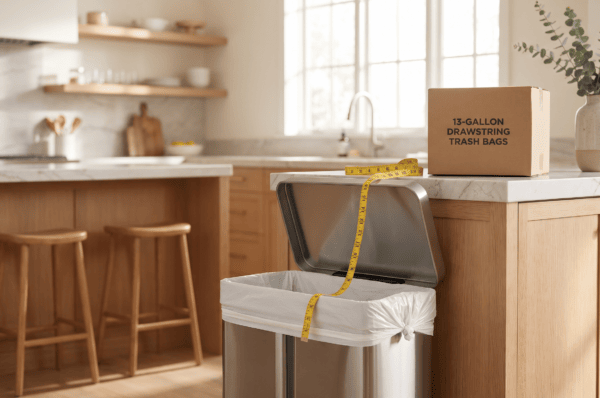
- Hang a 13-gallon tall kitchen bag on the cabinet door nearest your cutting board, or park a small bin at the end of the counter. Keep it at arm’s reach so scraps never hit the floor.
- Keep a second empty bag folded under the sink so a swap takes ten seconds.
Swap Timing
- Swap once after your big chopping session the day before, and again after morning-of prep.
- Tie off anything with raw poultry residue — wrappers, the absorbent pad from the tray, paper towels that touched raw bird — and take it straight to the outdoor bin the same day. Never let it sit overnight indoors.
If your kitchen bags tend to tear under wet peels and turkey juice, upgrade before the holiday. Melplas 13-gallon drawstring kitchen bags are built thick enough for heavy, wet scraps, and the drawstring makes one-handed swaps possible while your other hand holds a knife.
Station 2: The Cooking Station (Oven Time to Doorbell)
Cooking waste is different from prep waste: it arrives in small, steady bursts — foil, twine, parchment, taste-test spoons. The goal is keeping trash out of your cooking zone so counters stay clear for hot pans.
Setup
- Position a small can or bag just outside the kitchen triangle, by the doorway or the end of the island — not between the stove and the sink.
- Set up a ‘grease jar’: an empty can or jar for drippings and fat. Never pour pan grease into a trash bag or down the drain; it seeps through seams and solidifies in pipes.
Swap Timing
- Swap the cooking bag when the turkey goes into the oven, around midday.
- Do a final swap one hour before guests arrive so everyone walks into an empty, fresh bin. This is the swap that makes the biggest impression.
Station 3: The Post-Dinner Cleanup Station (Where Volume Explodes)
Dinner is where a kitchen bag gets overwhelmed. Plates, bones, napkins, foil pans, and scraped sides add up fast, and a 13-gallon bag will fail halfway through cleanup if you push it.
Go Bigger: 30 to 33 Gallons
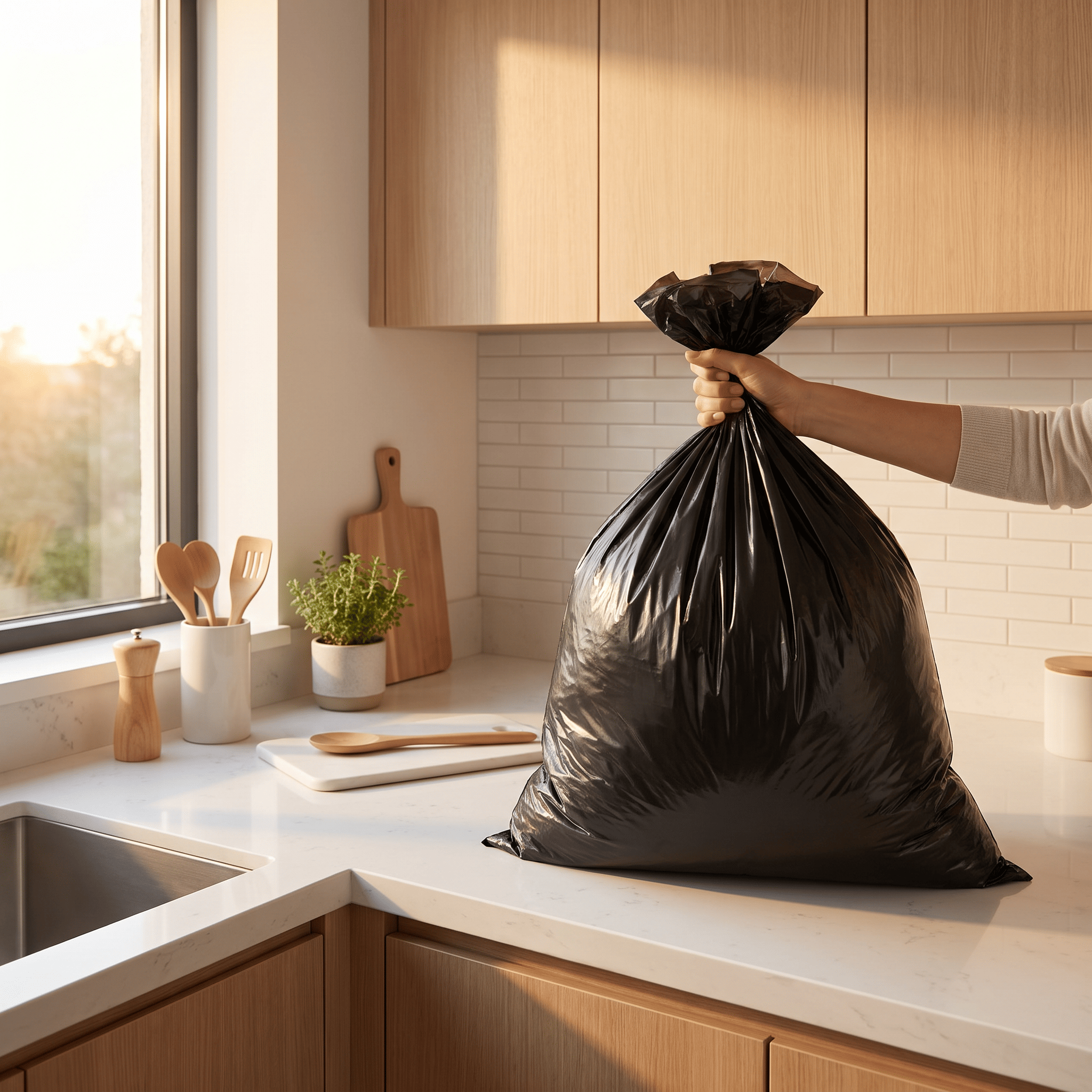
Stage a 33-gallon bag on a stand or in a bin near the scraping zone before you sit down to eat. Melplas 33-gallon trash bags handle the full dinner teardown — carving bones included — without splitting, which matters when the bag is full of pointy turkey parts and you are carrying it across a dark yard.
Swap Timing and the One-Hour Cleanup
- Leftovers first, trash second. Pack containers before anyone starts scraping plates — you will cut your waste volume nearly in half.
- Tie off the big bag when it is three-quarters full. Straining seams are how leaks start.
- Make the final run to the outdoor bin before dessert and coffee, while there is still daylight and momentum. Nobody wants to haul bags outside at 10 p.m.
Odor and Leak Control for a Food-Heavy Day
- Take raw meat packaging out immediately. The tray pad and wrap are the single biggest source of next-day kitchen smell.
- Freeze the carcass. If pickup is days away, bag the bones and freeze them until the night before trash day. Best odor decision you will make all week.
- Sprinkle baking soda in the bottom of every bin before you line it. It absorbs moisture and odor through the whole weekend.
- No liquids in bags. Gravy, drippings, and cranberry sauce go into the grease jar or a lidded container first. Liquids always find a seam.
- Watch for bone punctures. Wrap sharp carcass pieces in foil before they go in, and double-bag heavy loads.
Printable Thanksgiving Hosting Checklist
Copy this into your notes app, print it, and tape it inside a cabinet door. Bloggers and newsletter writers are welcome to link to this checklist — just credit melplas.com.
One Week Out
- Stock up: four to six 13-gallon kitchen bags and two or three 30-33 gallon bags
- Hose out the outdoor bin and confirm pickup day (it often shifts after Thanksgiving)
- Wash indoor bins with dish soap; sprinkle baking soda in the bottoms
Day Before
- Hang the prep station bag by the cutting board
- Finish chopping and make-ahead prep; swap the bag afterward
- Tie off raw poultry waste and take it to the outdoor bin
Thanksgiving Morning
- Fresh 13-gallon bag at the prep station; small cooking bag by the doorway
- Set out the grease jar for drippings
- Swap the cooking bag when the turkey goes in
One Hour Before Guests
- Swap every indoor bin and take all bags out
- Stage the 33-gallon cleanup bag where plates will be scraped
After Dinner
- Pack leftovers first, then scrape plates into the big bag
- Freeze or wrap the carcass; tie off and take out the final bag before dessert
The Bottom Line
Hosting goes smoothly when nothing piles up — including the trash. Three stations, the right bag at each one, and a swap schedule that follows your cooking timeline will keep your kitchen photo-ready from the first guest to the last slice of pie. Stock the bags this week and you can check the least glamorous item off your hosting list before anyone even asks what they can bring.